Portfolio

Projects & accomplishments

All the projects below were designed, implemented and coded by me, alone. The applications I have contributed to at work, at Advisor360, are proprietary and cannot be listed or presented here. But just believe me: they are beautiful, state of the art and best in class.

AI-native astrology and numerology, 2026 (astrotoken.info)

The problem it solves

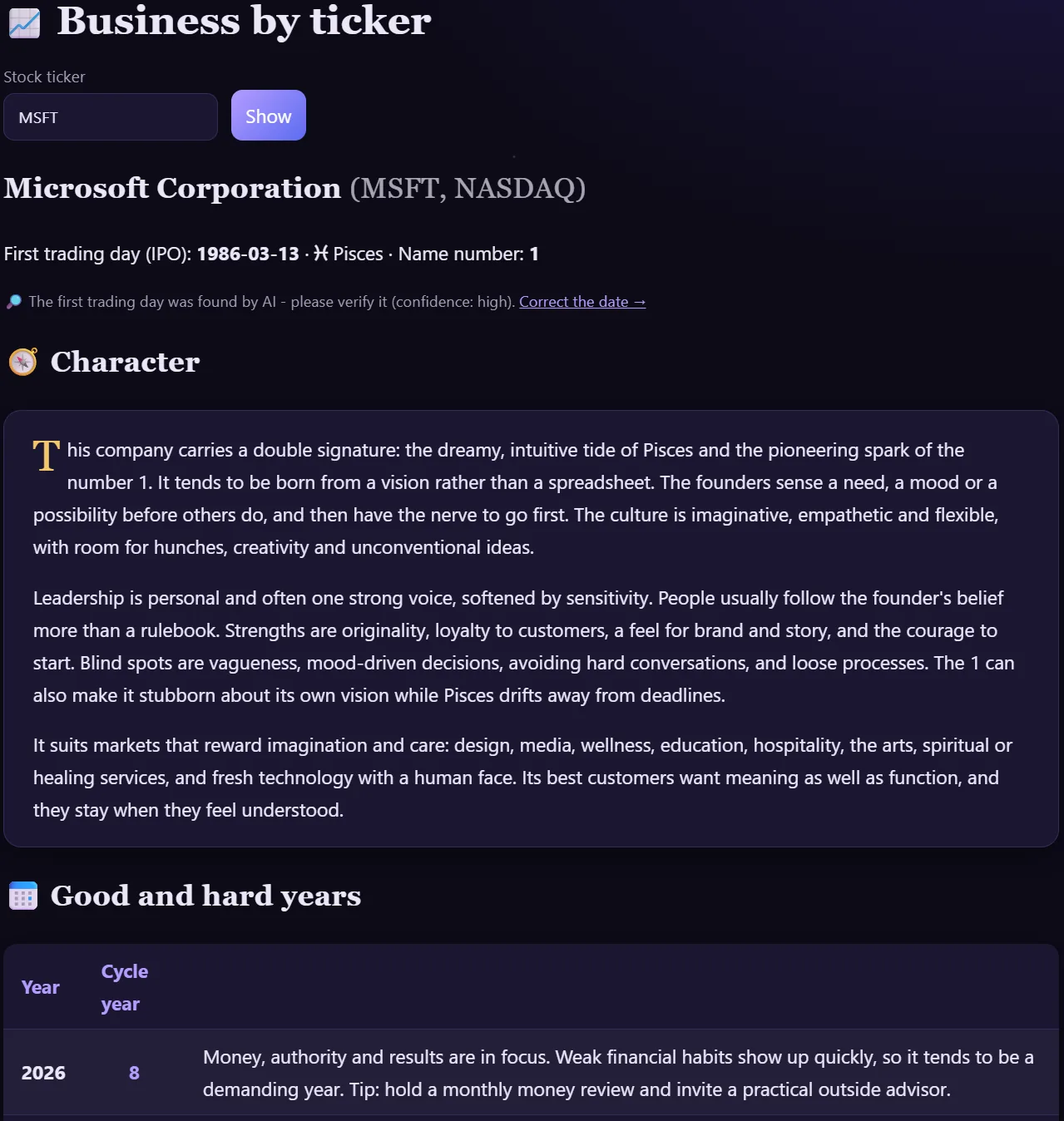
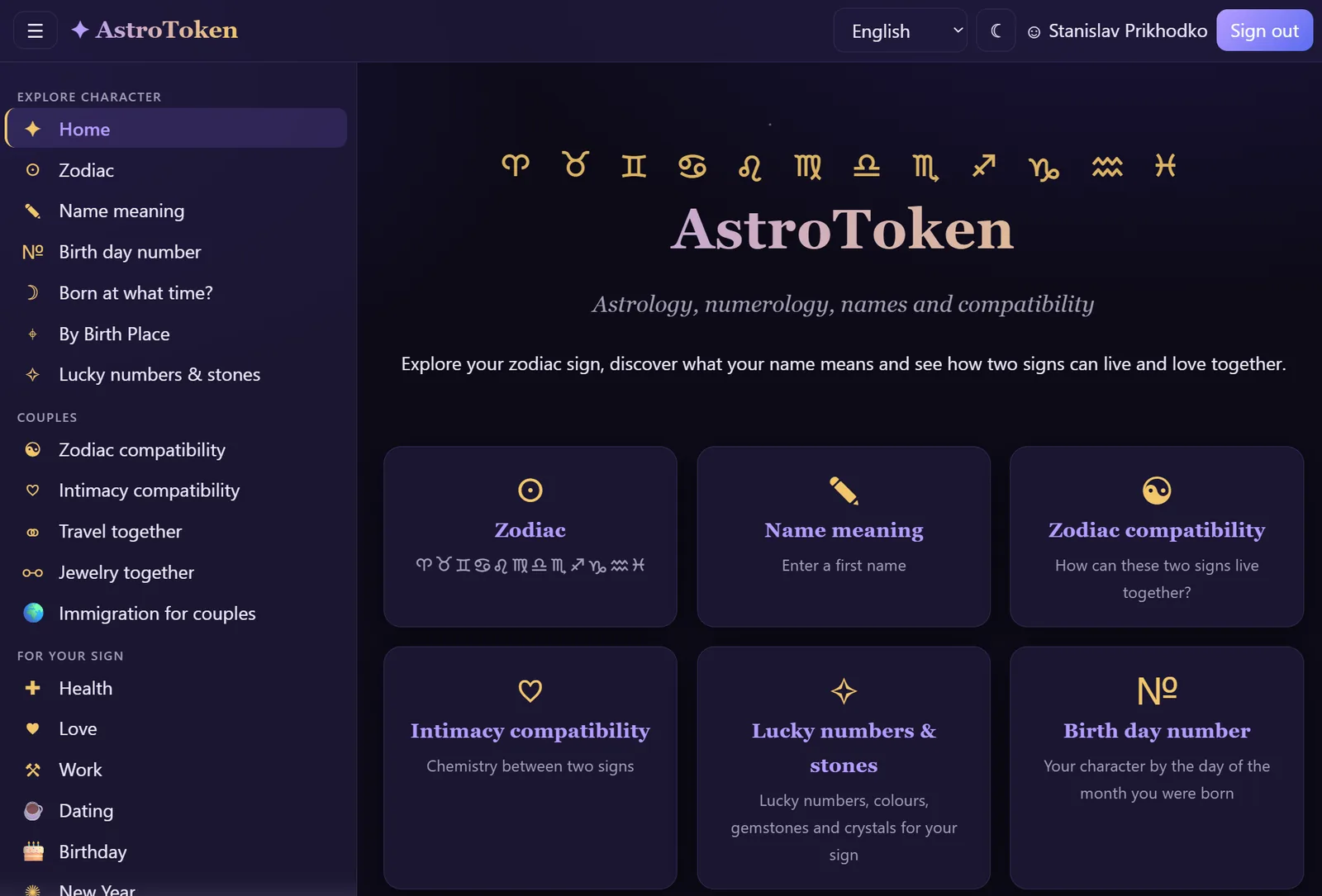
Most astrology and numerology sites either publish thin, generic text or pay for an AI call on every visit, so the bill grows with traffic. AstroToken starts with no content at all. The first visitor who asks for a reading triggers one AI call; the result is saved, and everyone after that reads the saved text. AI spend converges to zero as the audience grows, while the library of zodiac, name, compatibility and birth-chart readings keeps growing by itself. It also reviews businesses: enter a stock ticker, or a company name and founding date, and get a character profile and a ten-year outlook.

What made it hard

  • Get-or-generate pipeline: cache first, then database, and only then the AI. Ordinary page views can only read, so crawlers and refreshes never trigger a paid call.
  • Each reading is written once for all ten languages in a single generation, so every translation says the same thing.
  • Cost guards: per-visitor and daily limits on new readings, plus an automatic retry when the AI answer is cut off.
  • Business reviews with a fixed cost: the AI reading depends only on the company's founding sign and its name number, so there are 144 per language however many companies people look up. The company name, dates and the year-by-year table are calculated in code.
  • Ticker lookups have no data feed: the AI finds the company, exchange and IPO date once and saves it. The page says the date was found by AI, shows how confident it is and lets the visitor correct it.
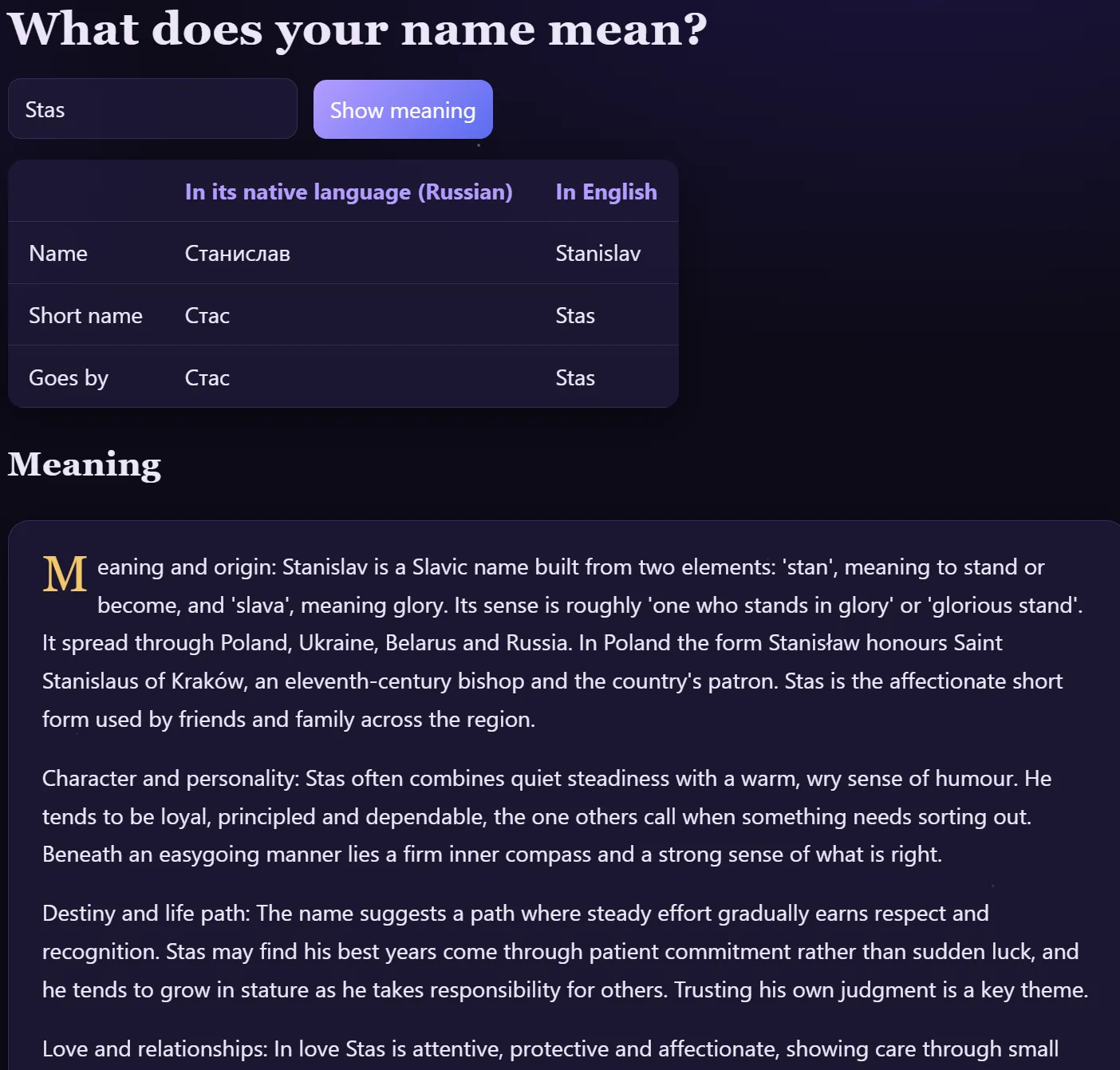
  • Name meanings need a dictionary that builds itself: the AI detects the name's language and origin and derives its local and English forms before the meaning is written and stored.
  • A serverless database that pauses when idle: fixed content is served from an edge cache so visitors never wait for it to wake up.
  • Birth charts (sun, moon and rising sign) are calculated offline from planetary positions and a built-in city and time-zone list, with no external service.

Python / FlaskClaude APIGoogle Cloud RunSQL databaseCloudflare R2

Visit astrotoken.info →
Job Finder: AI-driven job search, 2026 (contentedwife.com/jobs)

The problem it solves

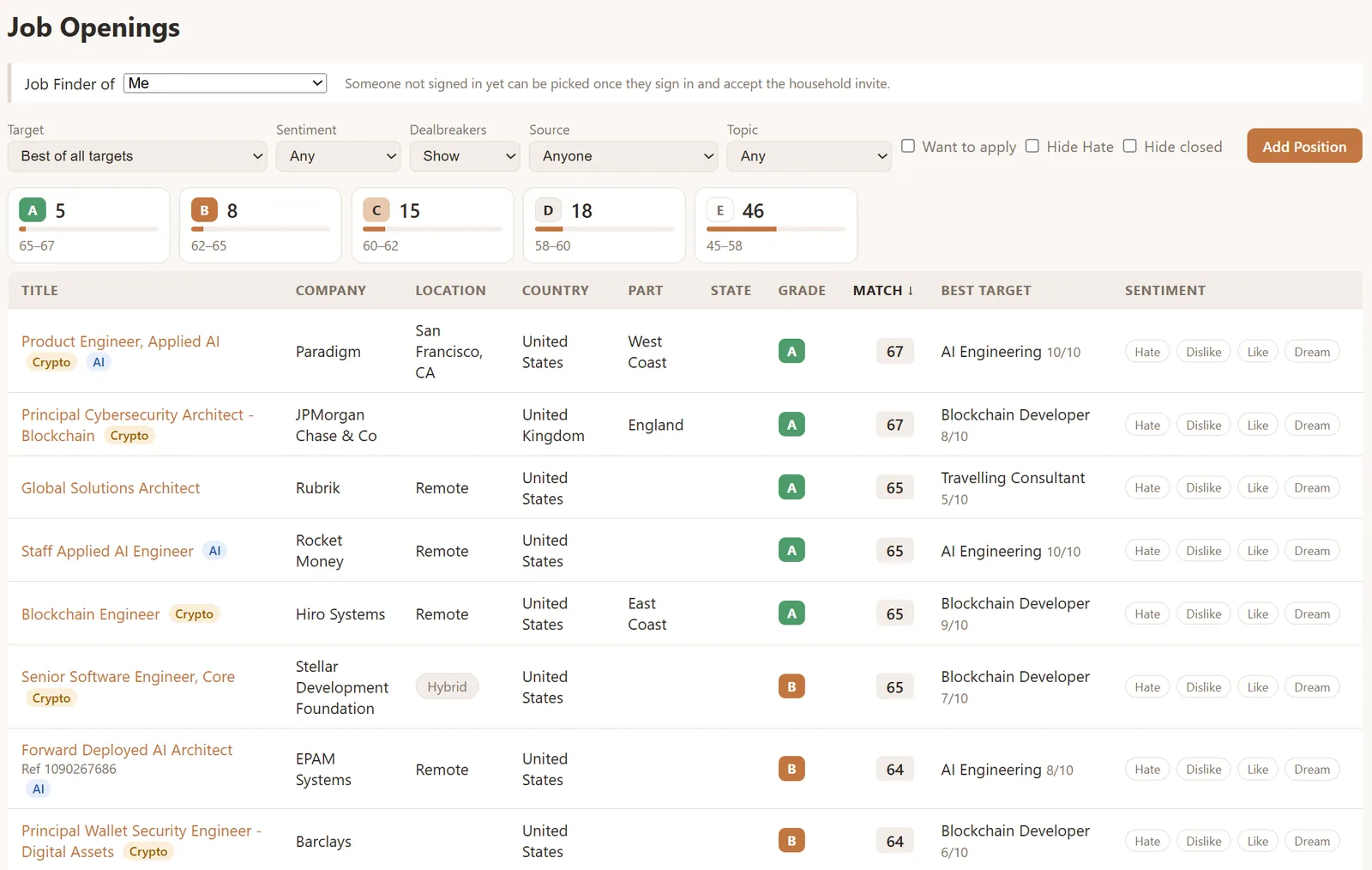
Searching for a job means reading long, multi-page listings scattered across many sites, then losing track of which ones you have already seen. Job Finder hands that reading to AI. It turns every unstructured posting into a tidy, searchable record, scores it against what matters to you, and remembers it for good. You look at a ranked shortlist instead of a pile of tabs, which saves hours every week.

What is new about it

  • AI reads the posting for you. A messy listing becomes a structured record: company, place, topic, and the skills it requires or merely prefers.
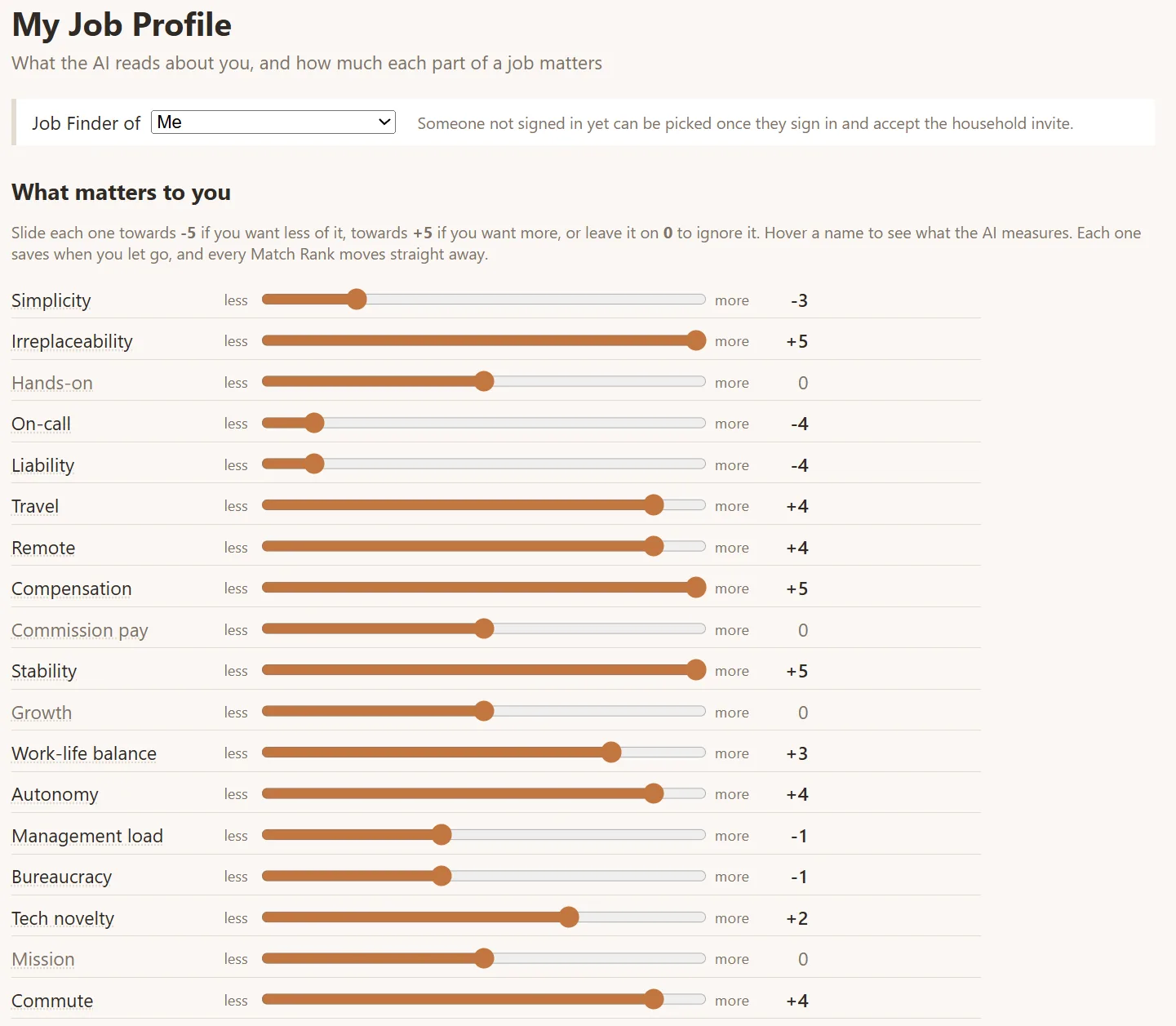
  • Ranking by your priorities, not keywords. Slide about twenty factors from -5 to +5 (on-call, travel, remote, pay, stability, commute and more) and every posting gets a match score and an A to E grade. Move a slider and the whole ranking updates at once.
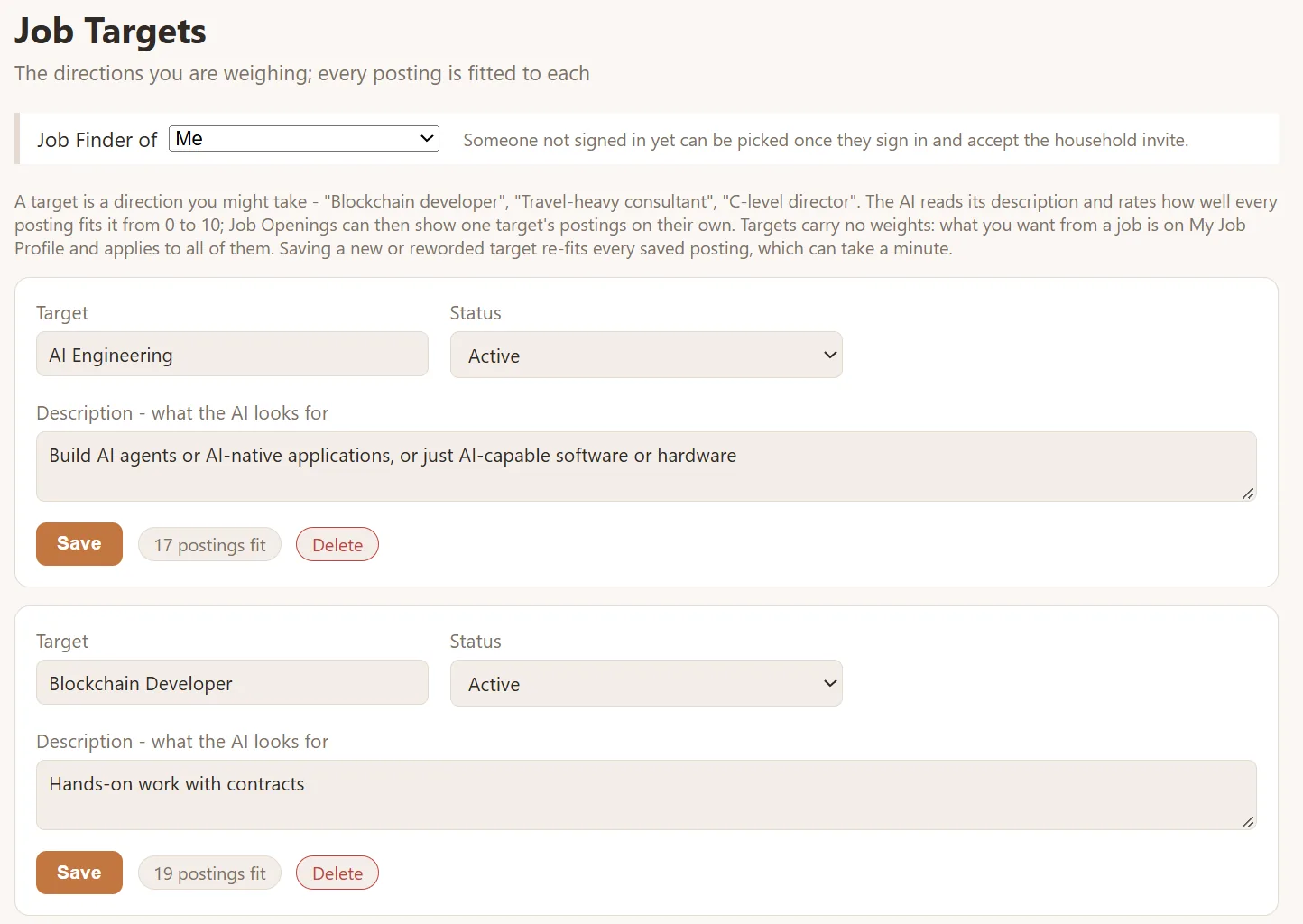
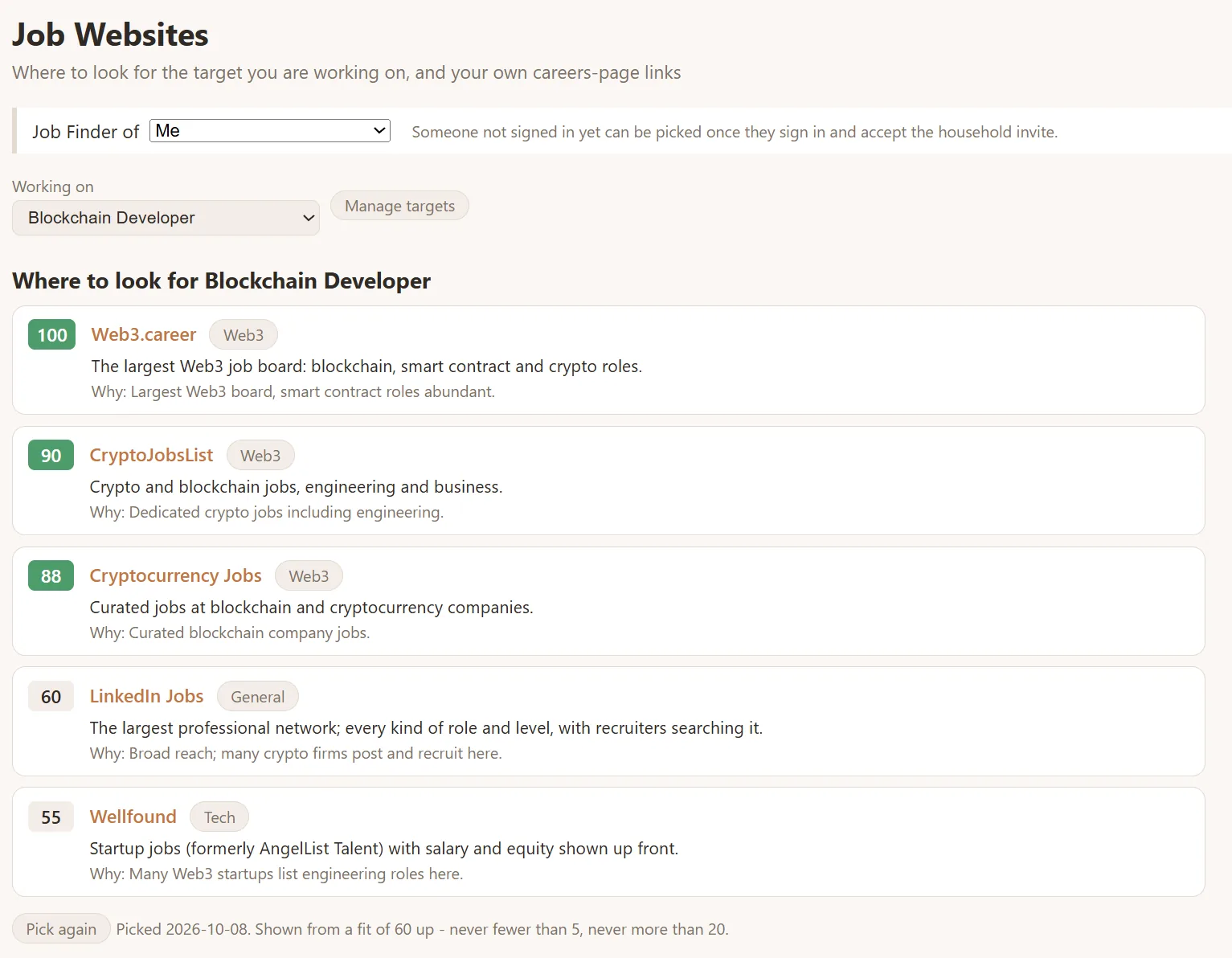
  • Careers described in plain words. You write the directions you are weighing, for example "Blockchain developer", and the AI rates every posting from 0 to 100 against each one.
  • Nothing is ever forgotten or lost. Every posting you have seen is kept with your verdict (hate, dislike, like, dream, want to apply), so you never read the same listing twice.
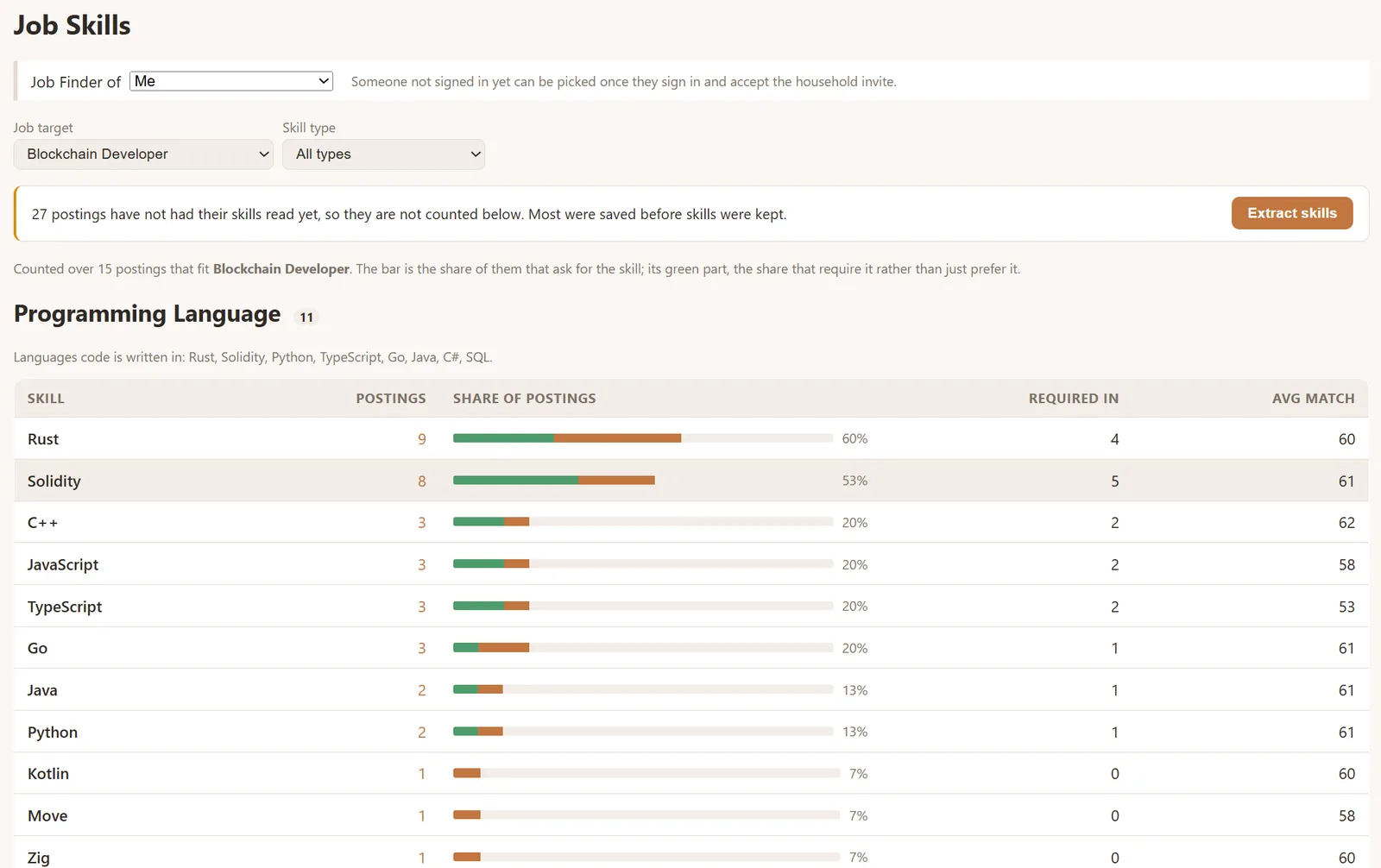
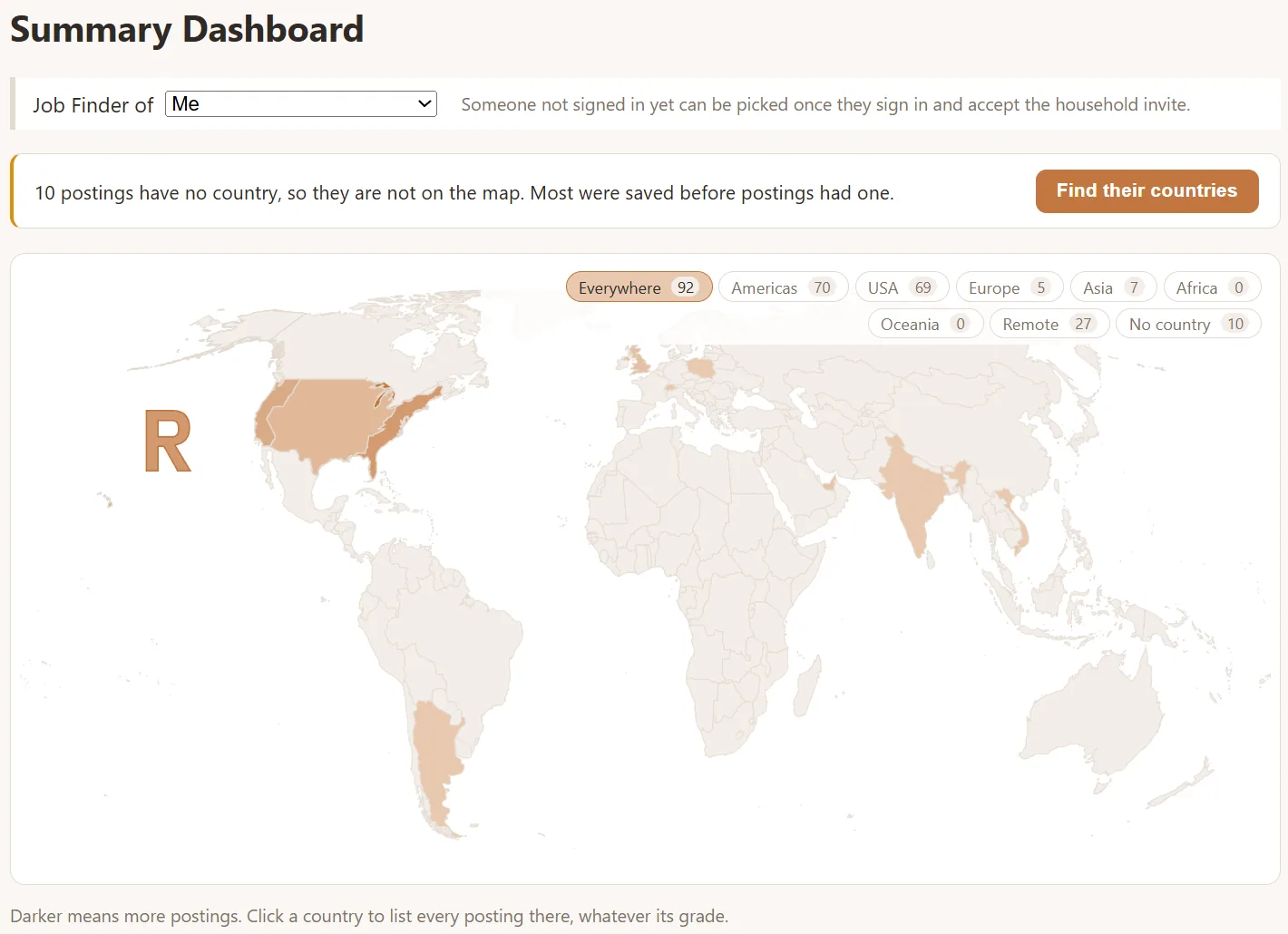
  • It also reads the market. A map shows where the jobs are, a skills table shows how many fitting postings require each skill, and the AI recommends which job sites are worth searching for each target.
  • A private search that feeds public sites. The listings you liked most are streamed to topic sites such as the crypto site stas.club and the AI site agentics.actor, so one person's job hunt becomes a curated job board for everyone else.

AI parsingPoint-based rankingSkills analyticsPublic job feeds

Visit contentedwife.com/jobs →

Gemstones Inventory Management, 2025 (preciousstone.info)

The problem it solves

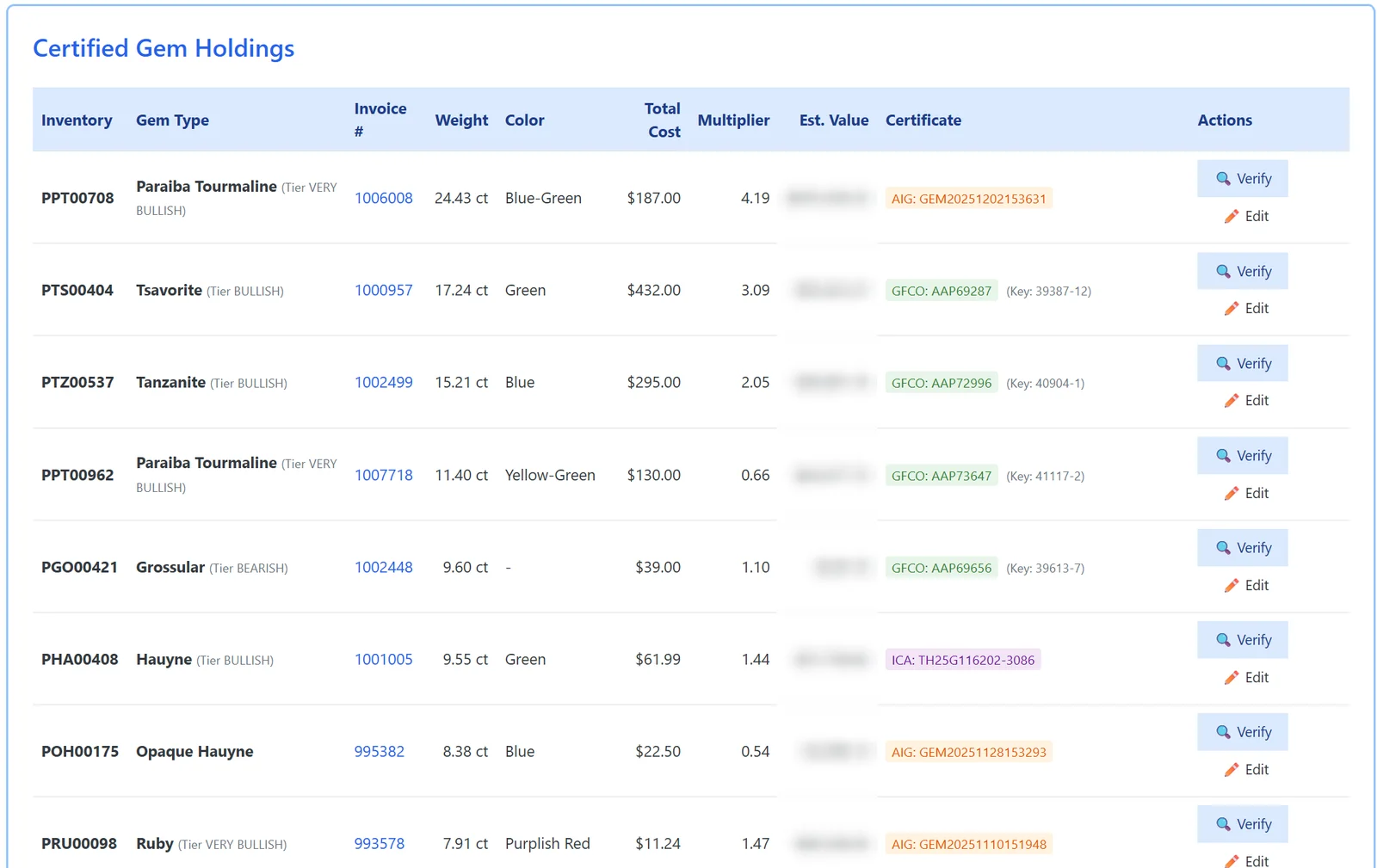
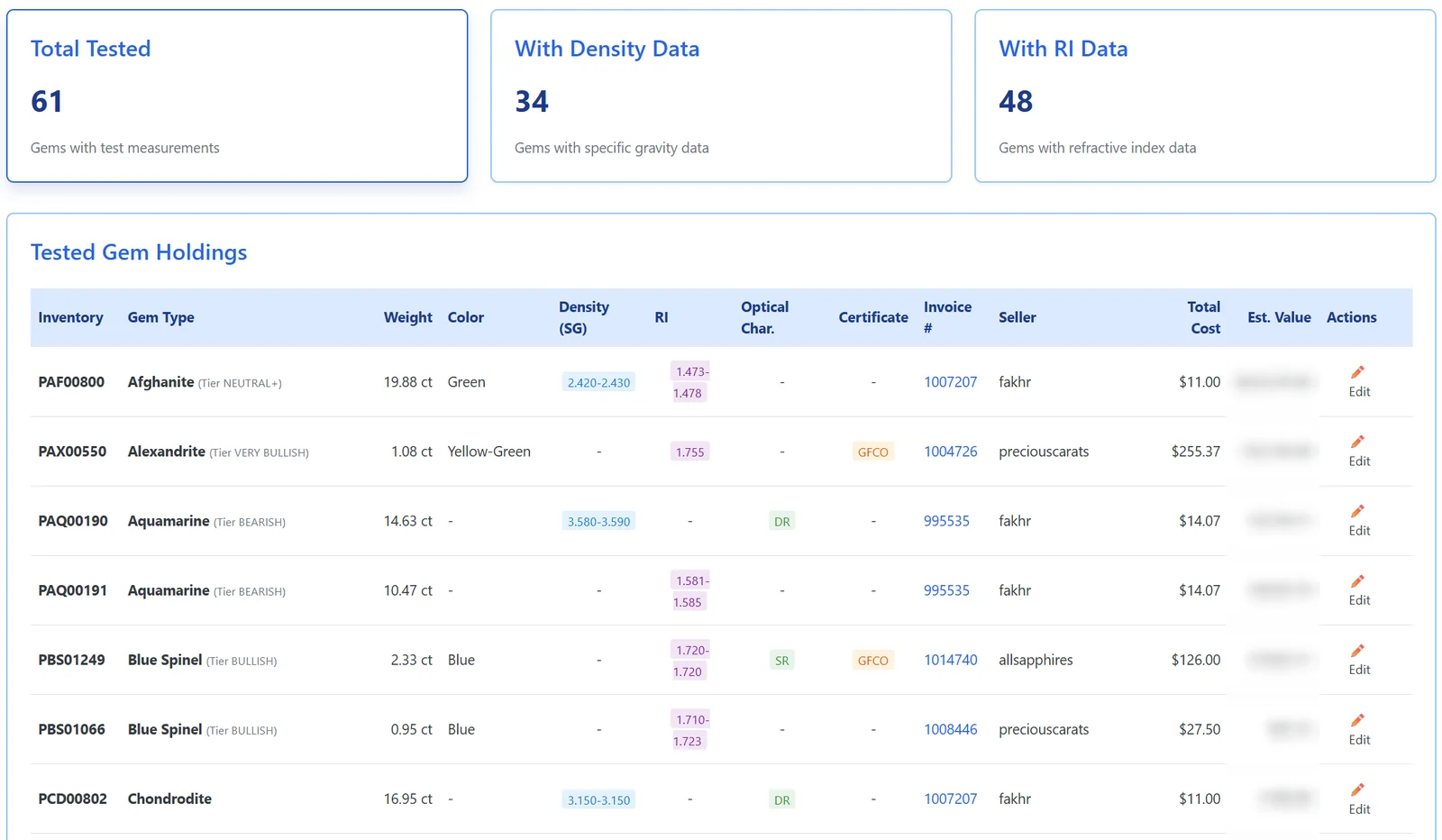
Anyone who buys loose gemstones from many sellers ends up with a pile of stones, invoices and lab papers and no clear picture of what they own or what it cost. This is my own inventory for that: every stone gets an inventory number and a record of its weight, color, seller, cost including shipping, invoice and where it ranks as an investment. It also answers the question that comes right after buying: is this stone really what the seller says it is?

What is new about it

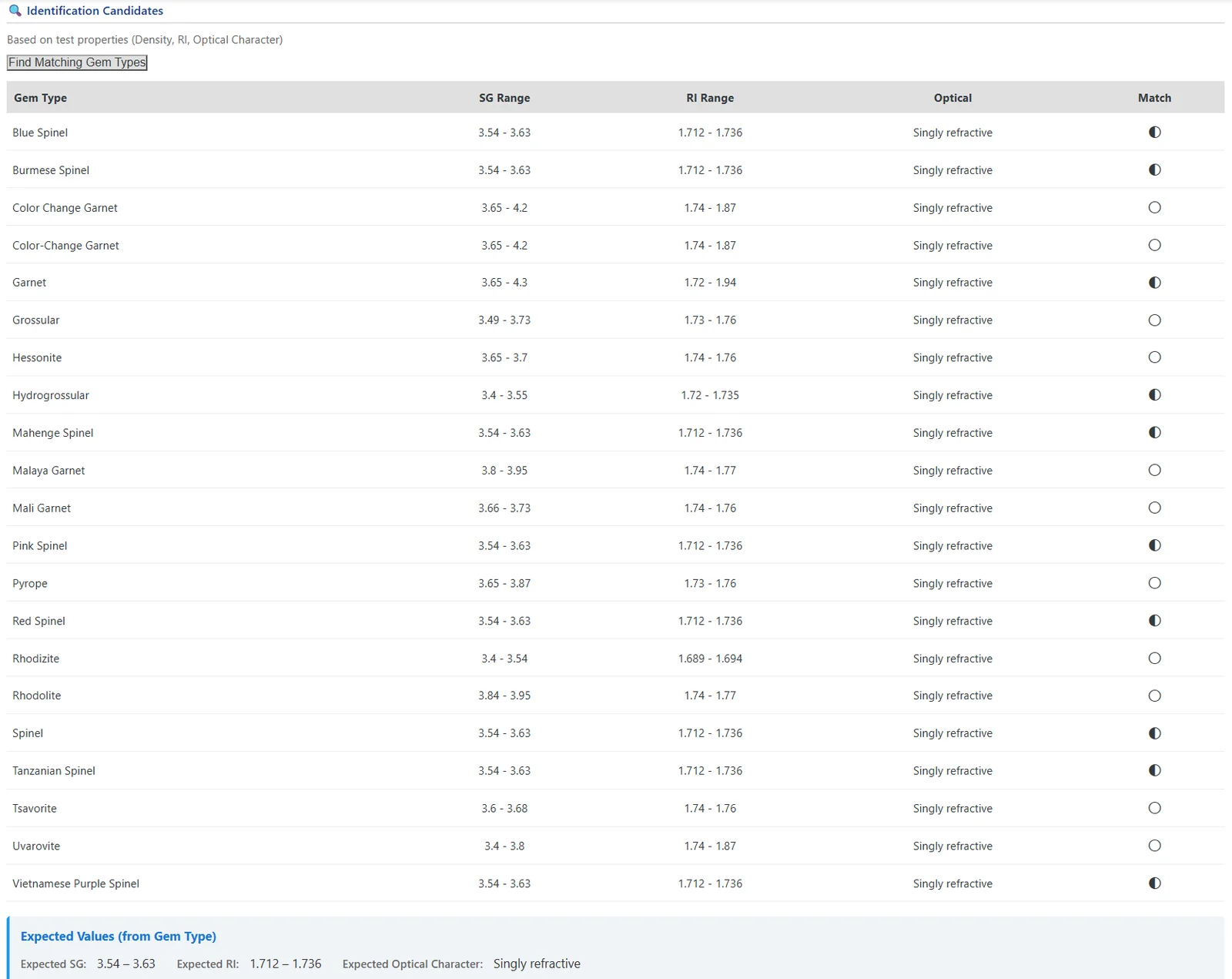
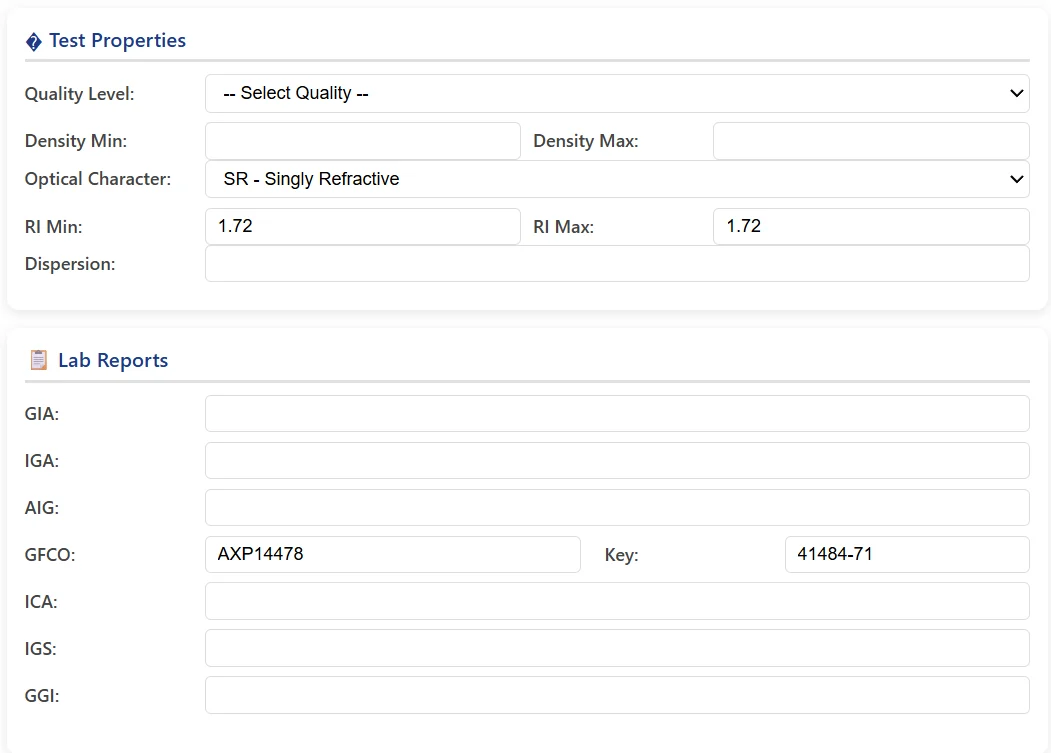
  • Identification by measurement. Enter a stone's density, refractive index, optical character and dispersion, and it finds the matching gem types, marking full and partial matches against the expected ranges.
  • Certificates tracked per stone, from several labs, each with a Verify button next to it, so a paper claim can be checked without hunting for the lab's site.
  • Cost basis kept honest. Purchase price and shipping roll into one total cost per stone, so every holding can be compared with its estimated value.
  • A view of how much has actually been tested: how many stones have measurements, how many have density and how many have refractive index.
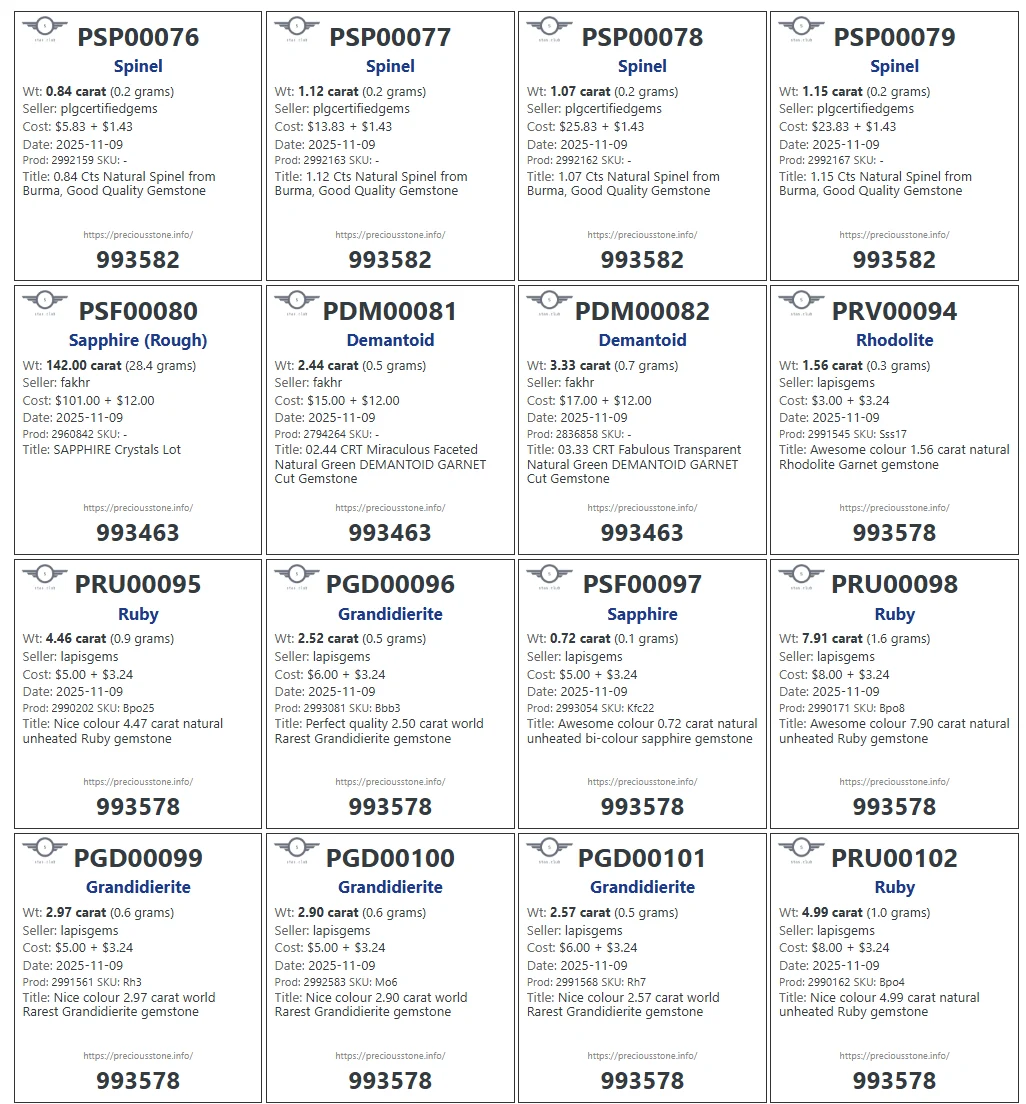
  • Printable inventory labels, so the physical stone and its record always find each other.

Identification by measurementCertificate trackingCost basisLabel printing

Visit preciousstone.info →

Gemstones Investment Ranking, 2025 (preciousstone.info)

The problem it solves

The gemstone market has no exchange, no standard price list and thousands of varieties, so it is hard to tell which stones make sense as an investment and what is fair to pay. This project sorts the chaos out. Every gem is classified by rarity, availability, liquidity, hardness, price range, size and the other factors that decide whether it is suitable as an investment, then ranked. It helps you find your way around a complicated market with many unknowns.

What is new about it

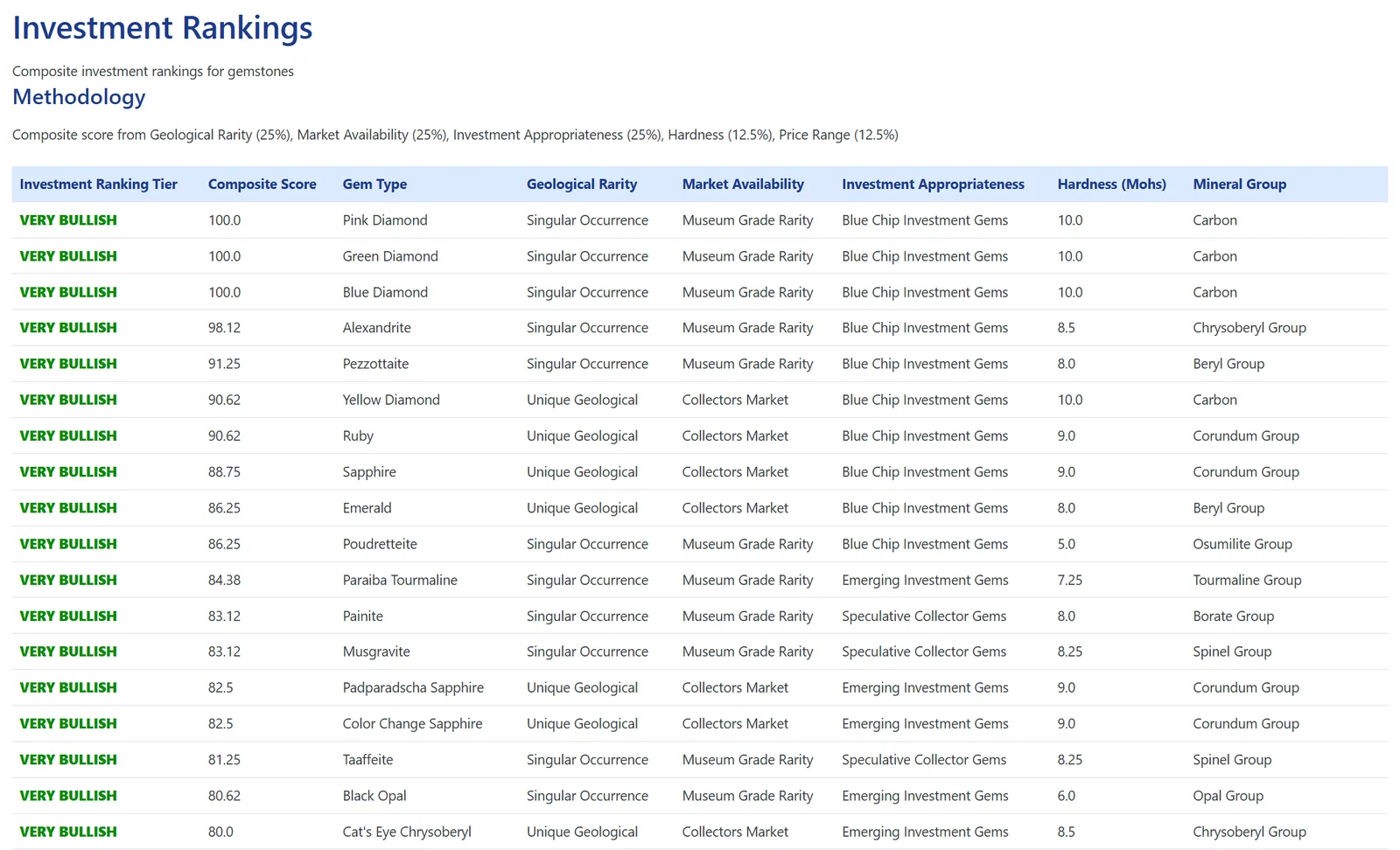
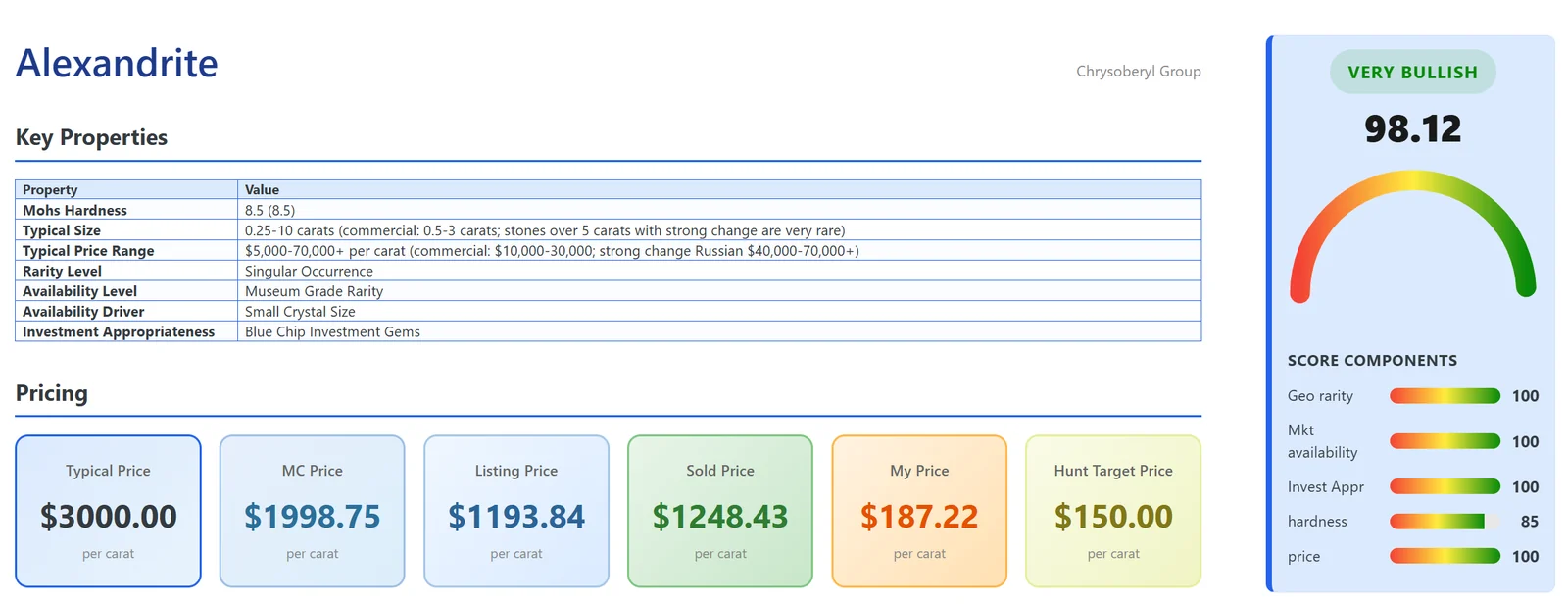
  • One composite score. Rarity, availability and investment suitability count for a quarter each, hardness and price range for an eighth each. A long list of gems becomes a ranking with tiers, from Very Bullish down.
  • Classified, not just priced. Each gem gets a rarity class, an availability class (from museum-grade rarity to a collectors market), what drives that availability, and an investment class from blue chip to speculative.
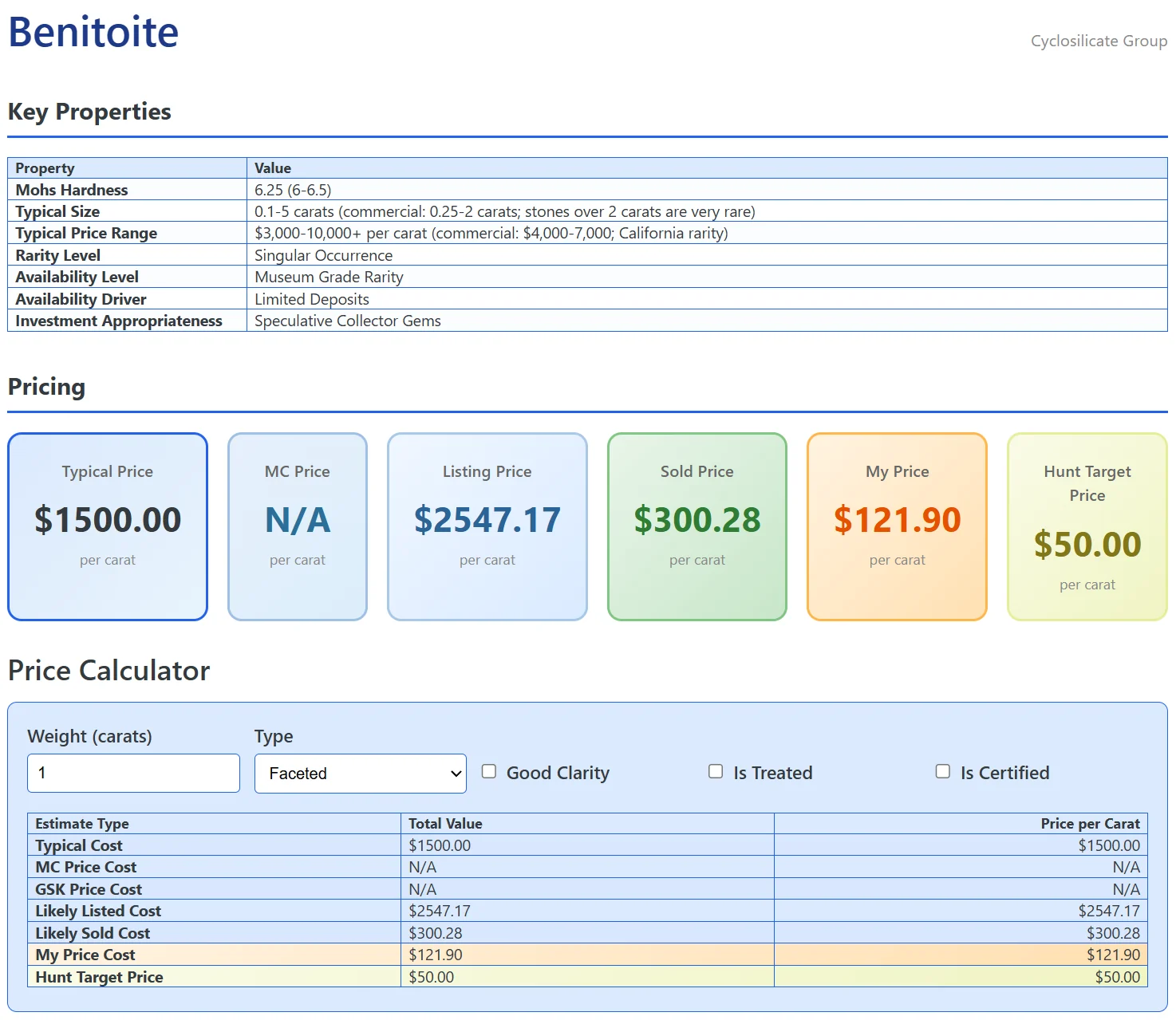
  • Prices from several sources side by side: typical, marketplace, current listings and what actually sold. They are not exact, but together they show the layout of the market.
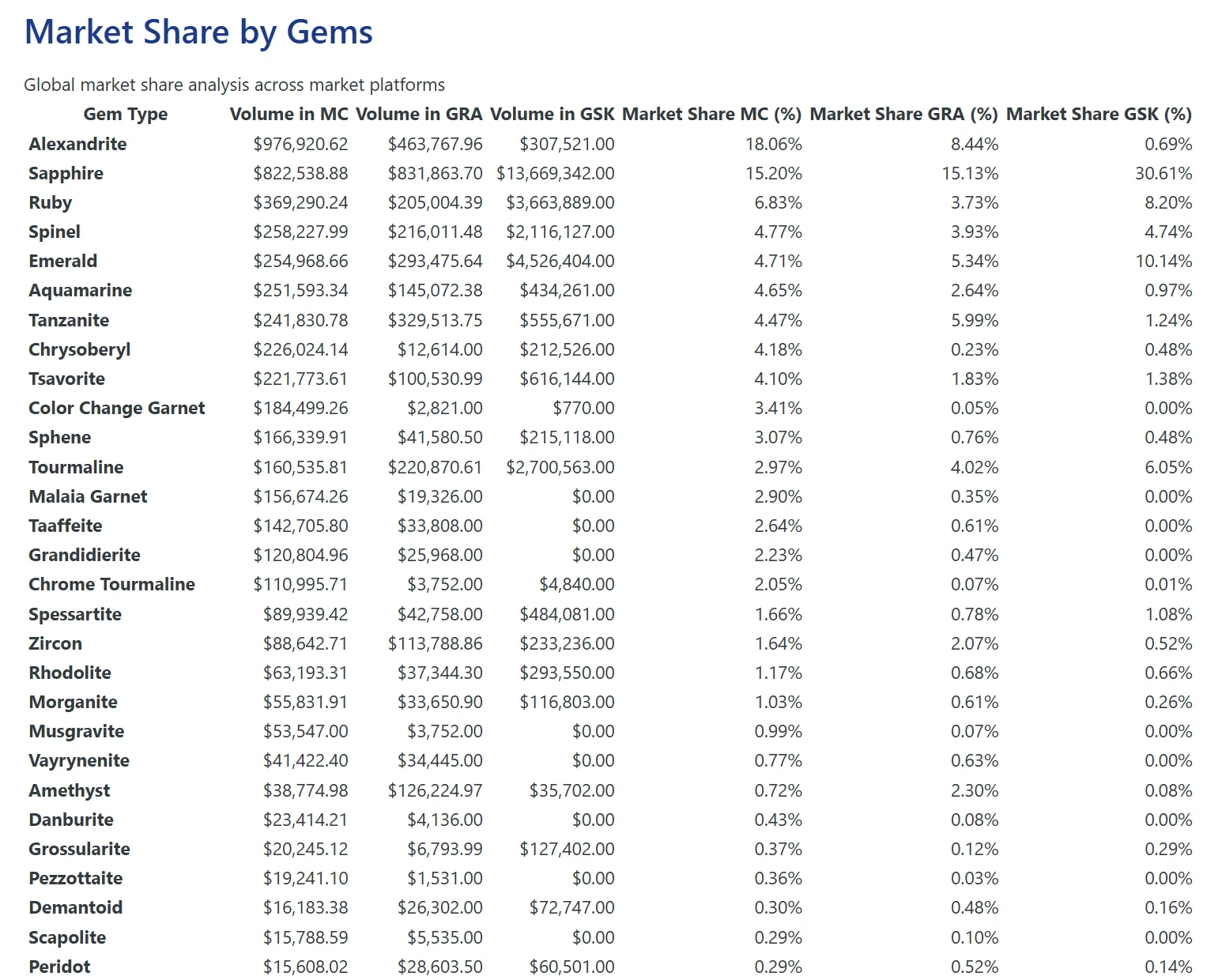
  • Where the money really trades. A market-share table shows, for each gem, how much of the volume each platform handles.
  • A price calculator for a concrete stone: enter weight, cut, clarity, whether it is treated or certified, and compare the estimates with my own price and my hunt target price.

Composite scoringRarity and liquidity classesMulti-source pricingPrice calculator

Visit preciousstone.info →

Custom ERP for a bottled-water manufacturer, 2006

The problem it solves

A water producer delivers returnable 19-litre bottles, PET bottles, coolers and cups to homes and offices across a big city. Every day it has to know who ordered what, which driver takes it where, what is left in stock, and who has paid. This custom ERP ran that whole chain in one system: orders turned into delivery routes, stock was tracked, payments were reconciled and the books were kept to GAAP-style standards.

What made it hard

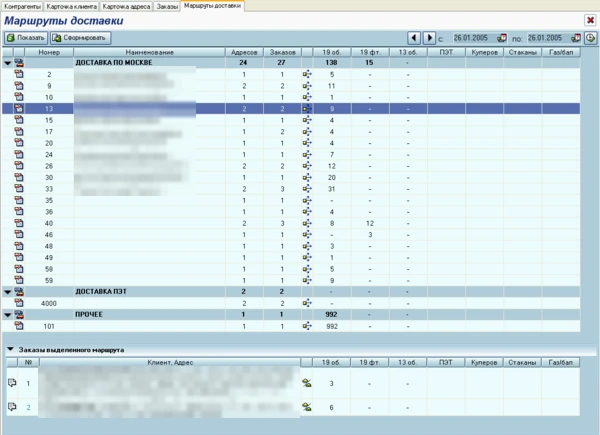
  • Orders to routes. Orders are grouped by address into delivery routes, and the dispatcher sees each route's totals of bottles, coolers, cups and gas cylinders at a glance.
  • Several kinds of goods and packaging at once. Stock and orders are tracked per item type, including returnable bottles that come back and have to be counted again.
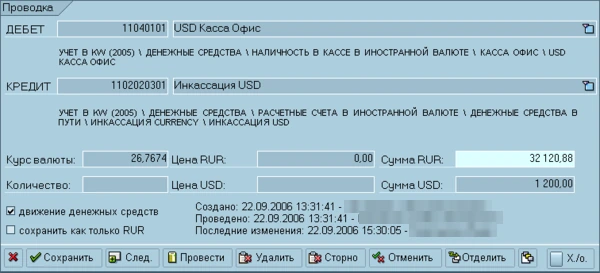
  • Proper double-entry accounting in more than one currency. Every posting has a debit and a credit account, an exchange rate, amounts in rubles and dollars, and a full trail of who created, posted and changed it. A wrong entry is reversed, never silently overwritten.
  • Payments reconciliation. Money received is matched to the orders and invoices it pays, so what is paid and what is still owed is always clear.
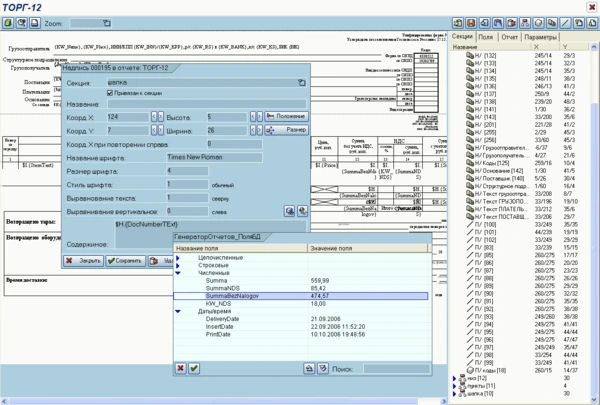
  • Invoice mass printing. Official forms such as the TORG-12 delivery note are laid out in an on-screen designer, then filled with live data and printed for a whole day of deliveries at once.

GAAP accountingInventory managementOrders trackingPayments reconciliationInvoice mass printing